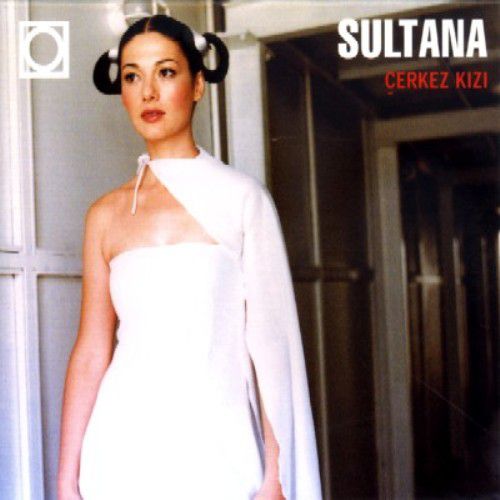
Can you tell us a little about your journey from Kayseri to New York?
Frankly, I don't want to talk about these kinds of things. I find them unnecessary. Because I emerged with music and I want to focus on music. It's like, I released an album and I was attacked even before anyone listened to the music. And I don't want to sit here and recount my life step by step. Frankly, I'm quite troubled by this. So let's just drop it.
Okay, let's talk about New York then. What did you do there related to music?
My main reason for going to New York was music. I had taken music lessons before, but I hadn't received academic or conservatory training. I was writing lyrics. Hip-hop is a natural music genre that emerged from New York. And I wanted to create something original, filtering it through our own culture to produce something unique. That's why I went to New York. I already had a few friends in the music industry. Of course, it was easy for me to meet producers through them. Over time, I became part of a certain music circle. Meanwhile, I started working on demos. And during this time, I enjoyed New York. It's a really beautiful place. When you miss Turkey, you have the chance to go to a Turkish restaurant right away. Or you might meet a Turkish driver in the taxi you take. I can say that I felt at home. I continued working on demos for a while longer.
Were you singing in Turkish during the demo recordings?
It's in Turkish. Actually, some of the songs on this album came from that circle. Then, thanks to that network, I had the opportunity to meet Ahmet Ertegün. I gave him a demo. He liked it very much and asked me to continue my work. Meanwhile, I was going to come to Turkey in 1998. He also advised me to talk to Pozitif about releasing an album. So I did. Besides that, I also spoke with a couple of record companies. Through this, I examined how the music industry works in Turkey and what the conditions are like.
Were you alone when you did these things? Or was there someone supporting you?
Generally, I did everything myself. Then I continued to meet with Pozitif. They showed a lot of interest in me. Later, in 1998, I received an offer from Burhan Öçal to participate as a guest artist at the Parliament Jazz Festival in İzmir. I gladly accepted. I participated with two songs. Those songs were also included in the album. I verbally concluded my discussions with Pozitif. They indicated that they were interested but could only start production in 1999. Following this, I went to New York and continued my work. Eventually, things went smoothly, and we signed a contract. Meanwhile, all the musical groundwork was ready. A couple of months after signing the agreement, we went into the studio and started recording. Actually, I had planned to do the taksims (improvisations) while I was still in New York. But there weren't any musicians there for that. It was decided that the album would be released around January-February. I came to Turkey, but it was postponed due to some problems. Taking advantage of this opportunity, we decided to record the taksims here, and we went into the studio with Laço Tayfa. It turned out very well. After adding those elements, we sent the resulting product to New York, where we completed the mastering. We finished the album's graphic design and filmed the music video for "Kuşu Kalkmaz".
Why did you choose to release your first album in Türkiye?
I speak Turkish. Also, hip-hop isn't very well-known in Turkey. I wanted to do it correctly and introduce it properly. I could always do it in English. Most of what I write is in Turkish anyway. I don't know, why not?
You can speak Turkish with a fluent accent. But we can't say the same for your songs. Do you intentionally distort your accent when you sing?
But this is about rap, about rhythm. I read a few reviews in the newspaper. They were saying things like my Turkish is broken. I don't agree with that. On the contrary, my Turkish isn't broken. I construct my sentences quite well. There were many Turks in New York, and Turkish and English were used together. This gave me the opportunity to practice. In fact, sometimes I don't want to use English words in my songs. I've even spent hours thinking until I find the Turkish equivalent. But the situation you're talking about is definitely related to the rhythm of the album. That's why I don't accept the criticisms about the accent being broken. If you look at it that way, in many Turkish songs, the accent is broken to match the rhythm. Because they don't understand what rap is, they immediately label it as having a broken accent.
Is slang an essential element in the music you make?
I think it's something related to the artist. I don't use slang much in everyday life. There isn't much slang on the album either, apart from a few words. But if I like something like that and want to reflect it, I might make a song with slang.
Do you think you were misrepresented because of the song "Kuşu Kalkmaz"?
I was so annoyed by this situation. Because we worked so hard to release the album, we made so many sacrifices. It's not easy for one person to achieve their dreams and accomplish things alone. But after releasing the album, just as we were about to fully enjoy the success, we were bombarded with people who hadn't even listened to it. People who had only heard the lyrics, who hadn't even listened to the music, came for interviews and started questioning the song.
But Sultana, who is sitting opposite me right now, is quite a lady. On one side, a lady, and on the other, a bird that doesn't get up...
So, can't a lady say "My bird won't take flight"? Also, just because my songs are perceived as aggressive, doesn't mean I have to be someone who picks fights with people every day. A track and field runner might run a hundred meters on the track, but they walk in the street. But of course, if someone disrespects me, I won't hesitate to react. Besides, everyone has that within them. Don't you have aggression within you? In certain situations, it comes out depending on the situation. But I don't think I'm aggressive in normal life. How are sales? Did you reach your target audience?
It reached its target audience. For example, something wonderful happened the other day. A young girl from Diyarbakır wrote me a letter. That made me very happy. Interestingly, the first order for the album came from Tokat. Do you consider yourself a pioneer in this field?
There was Cartel before. They were talking about Turkish immigrants in Germany, people who were treated as second-class citizens in Germany. Actually, we're no different from them. We treat ourselves as second or third-class citizens in our own country. But they were perceived as extremely right-wing and nationalist. They were judged politically and ideologically. I believe you recently filmed your second music video as well.
We shot the second music video for Filo Sepet. It was directed by German Susa Kohlstedt from Sinan Çetin's Plato team. It will start airing on TV in about a week. As for the script, it takes place around Eminönü, Plato, Cihangir, İstiklal Street, and the Tunnel area. In the video, there are a few male actors who admire me and fantasize about being with me in the places I pass through. We dance together, have fun, etc… I'm planning to start working on the second album towards next summer. Right now, I'm writing new lyrics in both English and Turkish. I'm planning for the album to be half English and half Turkish. Although, I've been quite affected by these recent events. To be honest, this has negatively impacted my creativity. To get over it, I went to New York, and inspiration returned. The reactions really messed with my head.
Röportajda Yer Alan Sanatçılar
|