We present to you an interview conducted in a warm and friendly atmosphere at Sony BMG Music (Taksim) with Nuray AKSOY, Local Repertoire Promotion Manager, Fako and Ahker on behalf of SND Team, and later with the participation of Tunç TURBO Dindaş… 
AHKER – First of all, welcome. Many people know you, but for those who don't, could you please introduce yourself?
BEKTAŞ – I was born in Yozgat in 1975. I went to Germany when I was 1.5 years old. I completed my primary school, high school, and university education in Germany. I was introduced to Hip-Hop in 1983-84. Around that time, we did breakdance for about a year or two. Then, in 88-89, I started doing graffiti. In 90-91, I started listening to Rap music by memorizing the lyrics of American rappers. Back then, there was Icecube and Da Lench Mob. I wrote and read in English for almost a year and a half, but I had trouble expressing myself, so I continued in German in 93-94. 1995 was the year of Turkish music with the release of CARTEL. My first solo album was called WAS LOUS'N and it was in German. After that, I started a project called "ALIS IM WUNDERLAND" (ALIS IN WONDERLAND), but it didn't happen because the company went bankrupt. Besides that, I've had over 50 featuring collaborations, the most famous of which are with MYSTİKAL and RZA from WU-TANG CLAN. We also released an album called CARTEL MAFFAY with Peter Maffay. It was very successful and sold over 500,000 copies. We received a PLATINUM RECORD AWARD. Apart from that, we've collaborated with artists from Türkiye and all over the world, and most recently, we made the album "SATIRLARIMIZA BAŞLAMADAN" with SIRTLAN. Besides all this, we are preparing my second solo album in German. And there's also this thing I call CARICATURE RAP. I recorded that too. Then, together with B-LOW (BÜLENT) from Hamburg, we're making a German album called Aksağanlı.
HYENA – I was born in Berlin in 1981.
AHKER – Is Stress Hyena over?
HYENA – The stress is over, yes, we're free from stress now. I received my school education in Germany. We lived in Izmir between the ages of 3 and 6. I was introduced to rap in 1995, or rather, I started listening to Turkish rap directly. We started writing rap lyrics for CARTEL; we had a group with friends back then, they quit, but I continued, and in 2000 I started this professionally. I met Killa Hakan around that time. In 2002, I met Bektaş, and things developed like that, and finally, we made the album "SATIRLARIMAZ BAŞLAMADAN" (Before We Begin Our Lines). 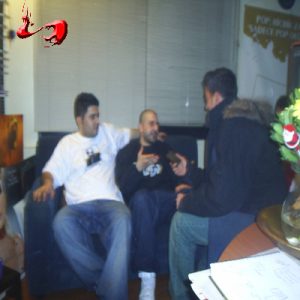
AHKER – Before the interview, we opened a thread on our website's forums so that members could learn about you and find answers to their questions. I'll start with the questions asked there. 1. You always use words like "party" in your fun songs; do you always have to use similar terms? (Dr. Fuchs Stil)
HYENA – If you're making a fun song and it's about parties, of course you're going to use the word party. You can't say you're at a wedding hall when you're at a party, can you? We don't see anything wrong with that. How do you dance? After all, you raise your hands, shake your hips, and so on.
AHKER – Do you have any commercial concerns? (Dr. Fuchs style)
BEKTAŞ – We don't think so. Because rap has a very wide range. There are different styles and issues. We are rappers. We shouldn't limit ourselves to certain topics.
AHKER – Why did they change their style so much? (atesboran)
BEKTAŞ – There needs to be development over time. Rap in the world is evolving and changing. If you rap like RUN DMC in '85, it won't fit, that's perfectly normal and natural. Actually, the style can change depending on the beat and the subject of the song. There's no such thing as purely diss rap or party rap.
AHKER – How does Sirltan view religion? (EagleMC)
HYENA – What's the connection? I'm a Muslim. Alhamdulillah, I'm a Muslim.
AHKER – Will the old Hyena return?
HYENA – Now, one has to ask this guy why he wants the old Hyena back? Was I the one swearing at him that he couldn't swear at home? Is that why? No, there's no such thing as the old Hyena. I can say that the best work I've done so far is "BEFORE WE BEGIN OUR LINES." So they should try to adapt to this and listen. We are people who are constantly open to development and want to take steps forward. We can't keep making those so-called "old" songs just to satisfy a few people.
AHKER – The album was produced by AKŞİT UĞURLU. He's a name we haven't heard before. Could you tell us a little about him?
BEKTAŞ – Akşit Uğurlu is a producer friend of ours from Berlin. He doesn't rap, he's a producer. We worked together on my solo album. He also has collaborations with KOOL SAVAŞ and EKO FRESH. He's particularly interested in hip-hop productions.
AHKER – "AĞLARIM" is the album's lead single. You also shot a music video for this song. The video seemed a bit simple to me.
SIRLTAN – Actually, it's not simple; we've covered all the details in this video. Everything described in the song is in the video.
AHKER – Why did you choose this track as the lead single?
BEKTAŞ – Every song is a breakthrough song for us. They all have their own unique characteristics, but ultimately, we are an emotional nation. That's why we decided on this one, as it's the most emotional song.
AHKER – There's one bonus track on the album, track number 7 – Alayı İşinde. Why is this track a bonus track?
HYENA – Actually, it has an interesting story; it was a song we wrote the last time we came here. It's a song entirely about ISTANBUL. We described what we experienced and saw here.
AHKER – You have a song called "Goodbye." In it, you're talking about saying goodbye to an old friend. Is this a diss track?
HYENA – In that piece, we weren't trying to address a specific person, but rather to describe the events a person experiences throughout their life. It's not something written directly to one person; it's an accumulation of experiences. No one's name is mentioned anyway.
AHKER – So this track isn't a diss... It's one of my favorite tracks. Those who have listened to your album "TOMAR BEY" will understand, but for those who haven't, could you talk a little about this track? Why did you feel the need to make such a track?
BEKTAŞ – If you've made music your profession, you have to deal with companies, and you might encounter people like this. We wrote it by exaggerating real-life situations a bit, making it more entertaining. You experience similar things from time to time, but you've never come across anything this bad.
HYENA – Of course, the films of the 70s were a big factor here. They made what we saw in Unkapanı a little more entertaining.
BEKTAŞ – This could have a second part. There's a lot of material on this, Mr. Tomar. 2 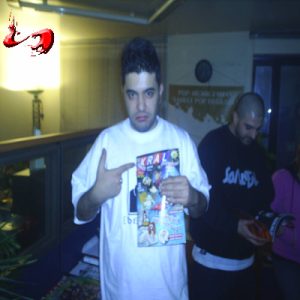
AHKER – There was a sentence in your press release, "Do you remember the last letter you received?" Since the internet became widespread, letters have been put aside. Is there a reason why your album is entirely in letter format?
BEKTAŞ – This is a concept study that hasn't been done before. There are many similarities between letters and rap. In the past, even before telephones existed, communication was done through letters, and it was a special event for people. For example, how many SMS messages do we have on our cell phones from last year? But we have stacks and stacks of letters from the past. Letters are permanent and have a very important quality.
HYENA – Because they are written with care. The letters are completely full of emotion. If we have been able to keep this alive and bring it back to the forefront, then we are very happy. Hopefully, we will encourage the PTT (Turkish Post Office) a little more in the future.
AHKER – So, have you received any thank you messages, directly or indirectly, from PTT (Turkish Post Office)?
SIRLTAN – No, but actually we should thank them because they allowed us to take photos at the historic post office in Sirkeci. Apparently, they don't allow anyone there. We owe them a debt of gratitude and we have expressed it.
AHKER – The album features female vocalists like Tuğba Barsu and Jale Gül, but why are there no rap features?
SIRYLAN – We already complement each other, I mean, it's a concept album after all, whether it's right to have a feature is debatable, after all, Bektaş's voice is different, my voice is different, they completely complement each other, so we didn't need a feature. We think the female vocals added more color. Maybe if we had a feature, it wouldn't have been so colorful, because you have to explain the subject to the person you're going to feature, you have to explain what they need to write. When you go into the studio and record, they record things that have nothing to do with what you explained, that's where we have difficulties. We did it this way and it turned out much better. If we had a feature, I don't know, maybe there would have been a color mismatch or something.
AHKER – In the choruses, where the female vocalists sing, it seems to bring more of an arabesque style to the song. What are your thoughts on this?
SIRLTAN – Arabesque isn't a foreign musical style to us; it's already Turkish. Turkish people are arabesque people. Of course, the media has given arabesque musicians such a negative image that now when people hear something similar to arabesque, they say, "It's not arabesque," or "How did this happen?" But that's not the case. There are great masters in arabesque music, like Orhan Gencebay, and this shouldn't be frowned upon.
BEKTAŞ – The style we use is specific to Turkey; we've been using it before. I used oriental rhythms in my German albums as well, in my instrumental arrangements. After all, we are Turks, and it's a part of our culture. I think those rhythms sound more pleasing to our ears. Not all the songs are in the arabesque style.
HYENA – Look, even 50 Cent sings in some choruses on his albums with a completely kitschy, arabesque feel when you listen to them. Eminem has similar things in some of his choruses. Jay-Z is completely kitschy; he makes a song called "Big Pimpin'" with a sample he took from Halit, and it sells millions. Even if it's not exactly the same, it has similar beats. These are completely kitschy things. I don't understand why it stands out so much when we do it.
BEKTAŞ – In the end, if something of quality comes out of it, whether it's arabesque, classical, or whatever, it doesn't matter. 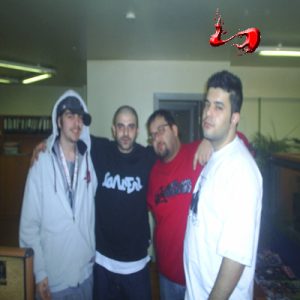
AHKER – You have a song called "Last Warning," what are you trying to convey with it?
HYENA – The Last Warning has actually become a song more like a cry. In The Last Warning, we're talking about the debt letters, warning letters, and admonition letters we receive. We're talking about the hardships of life and, in fact, we're venting even more resentment towards them, like we're complaining, stop sending them!
Events that we all experience, big or small, such as uncertainty and economic difficulties, affect us just as they affect everyone else.
AHKER – Sony Music released the "first Turkish rap album" in Turkey. Did you put a lot of effort into it? For example, I spoke with you in May 2004, and by then the album was almost finished. By the end of 2005, about a year and a half had passed.
HYENA – You're already talking about Sony Music here, so there's no need to say anything more. Sony is a huge brand; getting here wasn't easy, of course. There are things that need to be decided here; serious business is being conducted here, you can't just walk in anywhere. Tunç “Turbo” Dindaş helped us a lot in this regard; he's our biggest supporter, the man who brought us here.
BEKTAŞ – It is something that makes us very proud that Sony Music believed in a rap project and started working on it.
AHKER – This isn't your first rap album. You've done many projects before. What do you think is the state of Turkish rap in Turkey and Germany? Have there been any changes or developments compared to when you first started?
BEKTAŞ – After Cartel's emergence, it developed quite a bit; young people naturally became interested in rap and started listening to it, but it doesn't yet have a lasting presence in the mainstream music market. It's developing, being embraced and supported by certain groups, but it's not yet of the quality to reach large audiences.
AHKER – This album is finished. Now you've come to Turkey for promotional work and are receiving a lot of attention from the press. After the promotional work is finished, will your second project be together or separately?
HYENA – We will continue as Bektaş & Sırtlan. We haven't formed any ideas for the second project yet. But let's give a few hints, there might be features and stuff, but we'll share those with you in time...
AHKER – You're receiving a lot of media attention. Where have you done promotions or interviews recently?
SIRTLAN – will be on the cover of ATV's "Dansa Var Mısın" (Are You Ready to Dance?), Beyoğlu newspaper, Sabah, Mix magazine, Onyedi, Bluejean, Popup, and Kral magazine. Bluejean has a poster in this month's issue, and Popup is their album of the week. Cosmopolitan and Elele are also featured. Previously, we used to get excited whenever we heard Turkish rap; now we are paving a big path, not just for everyone, but for us. We are opening paths that were never opened before.
AHKER – The album cover design was done by Tunç “Turbo” Dindaş. He has been supporting Turkish Rap for years; he is the biggest supporter of Turkish Rap, even before anyone else was around, he was one of the first to have articles in the press, published in Bluejean magazine.
HYENA – Tunç is more than just our supporter; he's my closest friend, my biggest supporter, my older brother, my younger brother, my buddy, my everything, our everything, and at the same time, our biggest supporter. Tunç “Turbo” Dindaş has made a huge contribution to the existence of “Before We Begin Our Lines” and perhaps to its potential to rise a few steps higher. My deepest respect to him.
BEKTAŞ – He's also an old-school guy, a leading figure in this field, and a very knowledgeable one at that; he's not a 15-16 year old learning the ropes. 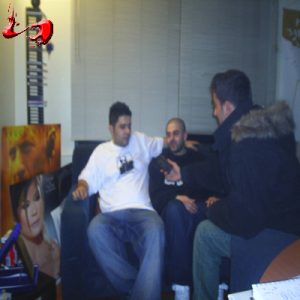
AHKER – Tunç had an article about hip-hop published in "HEY" magazine in 1987, just imagine that.
BEKTAŞ – Even across Germany, when you say "turbo," they say "oh, bronze," and it's known and respected by everyone.
HYENA – Tunç is a huge asset to rap, and the position he's in right now shouldn't be underestimated at all, because getting rap music into the media isn't something just anyone can do, but he's succeeding.
AHKER – Some songs on your album have the theme of "longing for homeland." What do you think of living in Germany? Are you considering coming to Turkey?
HYENA – We don't have such a plan at the moment, but hopefully we will come when the conditions are favorable.
AHKER – You have a song called "A to Z," and you say something like, "Let this be a gift to all the cities."
BEKTAŞ – Some people say, "He made a song listing the cities of Turkey," and so on. For someone living in Turkey, that might seem foreign, but we live in Germany, and there's a longing, a yearning for Turkey.
SIRLTAN – This is actually a love letter, a love letter we wrote to Turkey, that's why we're listing all the cities.
In the song "AHKER – We're Sorry," are you addressing your parents?
SIRLTAN – Families have expectations of their children, like "when you grow up, become a doctor" or "become an engineer," or "make sure you can hold a pen," and so on. In the end, we did what they said. Everyone experiences things, and we experienced things too. We wanted to apologize in this way, to say that we couldn't act exactly according to your wishes, but we were able to do these things. These feelings were already inside us, and we just expressed them by making this apology song.
BEKTAŞ – "Thank you" is more or less the same. We can say it's one of our most special, most personal pieces.
AHKER – Turbo, what do you think about the album?
TUNÇ – It's a bit difficult for me to speak without bias because, since I was involved in the album's production process, I listened to it constantly. But as I've written elsewhere, after Cartel, I think it's the only concept album in Turkish with specific themes, free from unnecessary things. It's very different in terms of sound, and you already know Bektaş and Sırtlan, so it's a quality album. 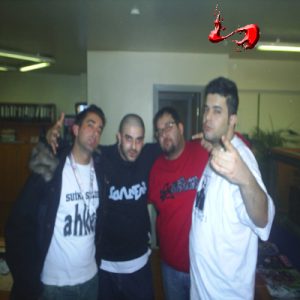
On behalf of the SND TEAM, we would like to thank you for taking the time out of your busy schedule for this interview, and we wish you continued success.
Röportajda Yer Alan Sanatçılar
Bektaş
Sırtlan
|